
How to Search the Atlanta Court Docket
Start with the Atlanta Municipal Court for a ticket issued into that court. The official page links Find My Case to Benchmark and sends eligible payments to Ncourt. Have the citation number, the name as written on the ticket, and the stated court date close at hand. Benchmark showed an unavailable shell during research, so a failed web page is not proof that no Atlanta court docket exists.
- Open Atlanta's official court page and follow Find My Case.
- Search with the citation details and compare the name carefully.
- Read the violation, event, status, date, and assigned time.
- If the matter moved, use Fulton County case search for the receiving court.
- Confirm an unclear or missing setting with the municipal clerk at 404-954-7914.
Atlanta Benchmark Search Limits
Benchmark is Atlanta's named Find My Case route. It should be treated as an entry point, not as the only access channel. The official link returned an IIS default or unavailable screen during inspection. Save the citation details before opening it, then return to the city court page if the shell fails. The Atlanta court FAQ and clerk phone can supply the next step.
A missing Atlanta result can also reflect timing, a spelling mismatch, or a case that moved to a county court. Do not substitute a commercial people-search page. Ask which court received the filing and use that court's official docket. This fallback chain is especially useful when the online system gives no field-level explanation.
Through the official Benchmark source, the captured image shows why a direct fallback matters.
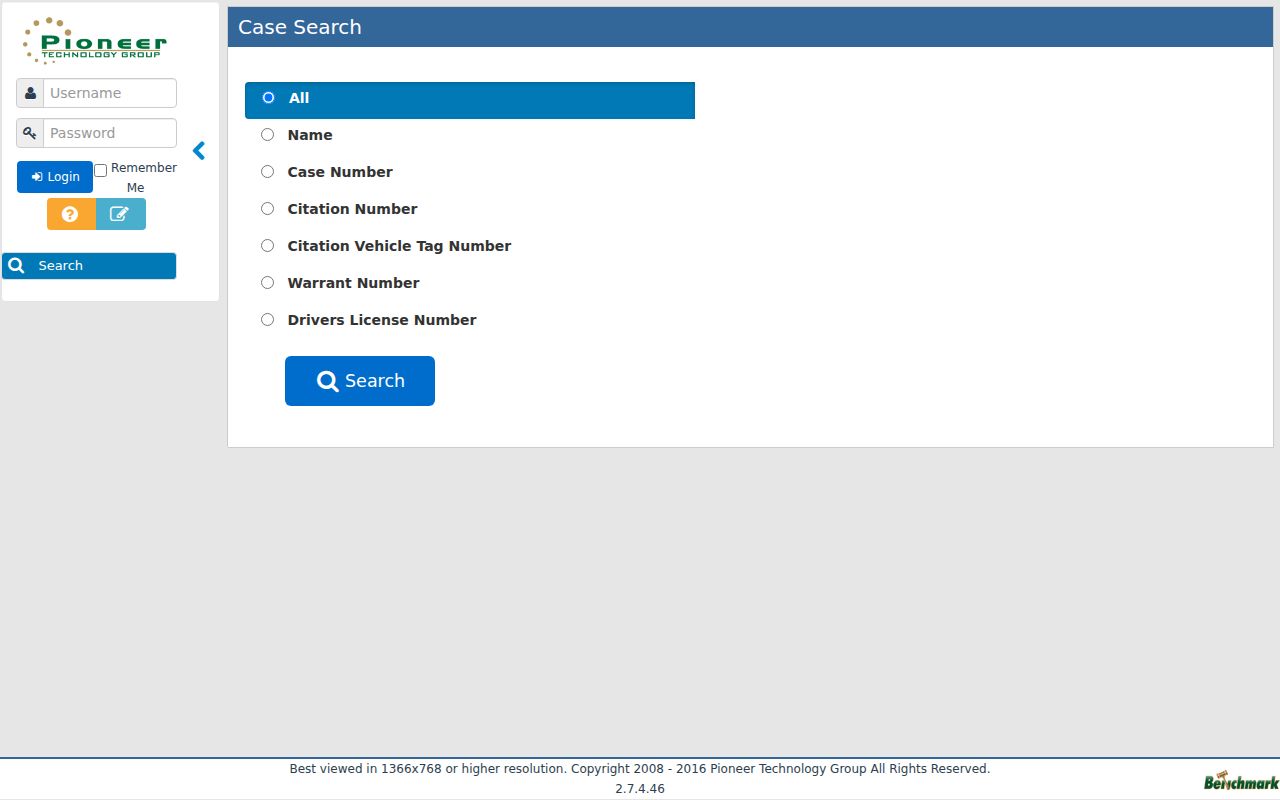
The unavailable shell does not cancel a date printed on a citation or a notice sent by the court.
The Atlanta Municipal Court
Atlanta Municipal Court hears city traffic and ordinance matters. Its record is separate from Fulton State Court and Superior Court files. The court operates at 150 Garnett Street SW, Atlanta, GA 30303, and the public contact number is 404-954-7914. The city docket is the first place to check when Atlanta police issued the citation into municipal court.
The official court page links search and payment tools while the FAQ explains dates, resets, failure-to-appear steps, and trial choices. Those sources work together. A payment screen is narrower than the Atlanta court docket because it may omit matters that cannot be paid online. The clerk remains the best source for the present setting and courtroom assignment.
The official Atlanta Municipal Court source provides a view of its city-level services.
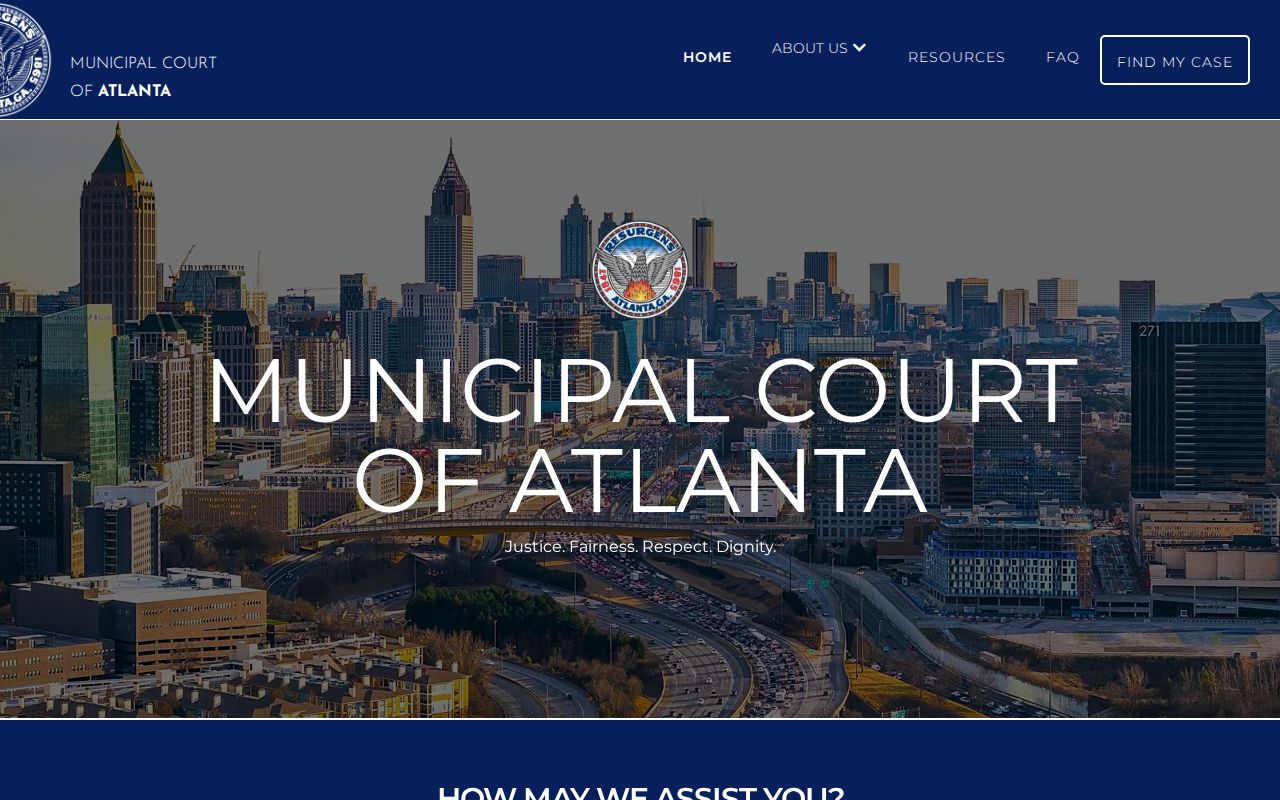
This source anchors the city record before any search moves into Fulton County systems.
Atlanta CONV Status Explained
An Atlanta citation marked CONV can mean the court received it but has not yet assigned a courtroom and time. It does not mean the matter is over. The Atlanta FAQ tells users to check the status regularly and watch for mailed notice. That distinction prevents a common error: treating a status code as a final disposition when it is only an administrative stage.
- CONV
- Citation received, with courtroom or time still to be assigned.
- Setting
- The scheduled court event, including its date and time.
- Disposition
- The court's recorded outcome after the case is resolved.
- FTA
- Failure to appear, which requires prompt contact with the court.
Use the live Atlanta court docket and clerk response, not the code alone, to decide when and where to appear.
Atlanta Court Dates and Settings
The citation itself is the first source for an Atlanta court date. Find My Case may add a setting or status after the filing reaches the system. Compare the two, then call the clerk if the online event lacks a courtroom or time. A reset request that is still pending does not change the duty to appear.
| Date | The printed or later assigned event date. |
|---|---|
| Time | The assigned time, which may post after receipt. |
| Courtroom | The room assignment; CONV may appear before one exists. |
| Status | The current administrative or case stage. |
| Setting Type | Arraignment, reset, bench trial, or another listed event. |
Atlanta Ten-Day Reset Rule
Atlanta advises that a reset request should be made at least ten days before arraignment. The request may be submitted in person or through the city's form and mail route. Approval is discretionary. Filing the request does not itself move the date, and a pending request does not give permission to miss court.
Reset check: Keep proof of the request, then confirm that the Atlanta court docket shows an approved new setting before relying on it.
If the deadline has passed, contact the clerk instead of assuming the same form will solve the problem. The Atlanta FAQ separately describes an FTA reset path for a date that has already been missed.
Atlanta Traffic Tickets
An Atlanta citation usually begins with the date printed on the ticket and the city's Find My Case route. The Ncourt link is for payment eligibility, not a full docket copy. If the vendor blocks access or rejects the citation, call the municipal clerk and ask whether the charge requires an appearance.
Paying, pleading guilty or nolo, and contesting a charge are distinct paths. A jury demand can move the matter to an appropriate Fulton court, while a city bench matter stays on Atlanta's calendar. The Fulton County traffic court records page covers the county-level route without replacing the city check.
The Atlanta citation and trial source is shown in the assigned court FAQ capture.
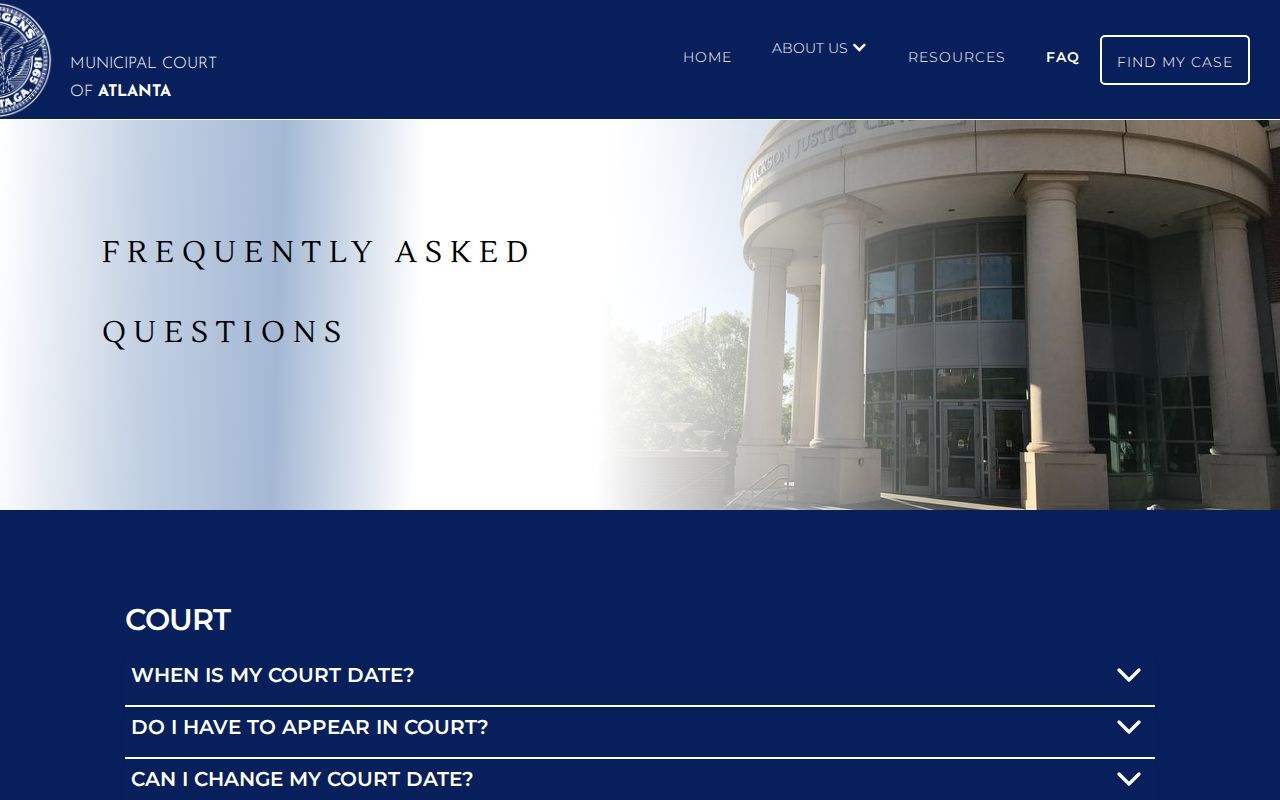
The FAQ adds practical meaning that a payment vendor alone cannot provide.
Atlanta Payment Portal Fallbacks
Atlanta officially links Ncourt for eligible citation payments, but that vendor was challenge-blocked during research. A blocked payment page is not a finding that the ticket is dismissed or that no balance exists. Return to the Atlanta court page, review the FAQ, and call 404-954-7914 with the citation in hand.
Ask whether online payment is allowed, whether an appearance is required, and whether the docket has an assigned event. If the matter is payable, confirm that the payment posts to the correct citation. If it is not payable, follow the court's appearance instructions. These checks preserve the difference between a payment transaction and the municipal court's official case history.
Where Atlanta Cases End Up
City ordinance and municipal traffic cases start in Atlanta Municipal Court. A jury demand or transfer can place a matter with a Fulton County court. Felony prosecutions and major civil cases belong to Superior Court, while State Court has its own misdemeanor, traffic, and civil records. The receiving court must be confirmed from the notice or clerk.
Docket flow: Atlanta Municipal Court › Fulton County Courts › Superior Court of Fulton County
Search the Atlanta system first for a city citation. When the city reports a transfer, use the named receiving court and case number. Fulton Odyssey can cover Superior, State, and Magistrate records, but it does not turn every municipal entry into a county filing at once.
Atlanta FTA Recovery Steps
A missed Atlanta setting can lead to an FTA entry, a warrant, or license consequences described by the city. Act on the court record promptly. Check the citation and online status, then call the clerk to ask for the current FTA reset or warrant-clearance process. Do not treat a fresh payment attempt as proof that the failure-to-appear issue has cleared.
The Atlanta FAQ distinguishes a reset request made before arraignment from the procedure after a missed date. Follow the path that matches the docket. Keep confirmation of any new setting, and review the Atlanta court docket again before traveling to court. A verbal or written clerk confirmation is more reliable than an unchanged vendor screen.
Public Access to Atlanta Court Records
Atlanta court records are available through the court's public channels, subject to sealing, restricted material, and protected personal data. Search the public docket for basic events, then request the needed city record from the municipal clerk. Fulton County open-records routing is not a substitute for a request to the city court custodian.
Key Rules:
Georgia Open Records Act guidance explains general request fees, timing, and exemptions.
Court records remain governed by court custody and sealing rules as well as public-record principles.
Restricted, sealed, and protected records will not be supplied merely because a docket entry is public.