
How to Search the Fulton County Court Docket
Start at the Fulton Clerk Find a Case page for any Fulton County court docket search. It points Superior, State, and Magistrate lookups toward the right public tools. Have the court name and case type ready. Fulton's current Odyssey portal may ask you to register first.
A full party name helps. So does an exact case number or citation number. Name-only searches often return matches from several courts, plus other people with similar names. The best record comes from the court that took the filing. A city traffic citation usually belongs to city court, not Fulton Odyssey. Probate and Juvenile matters sit with their own clerks. Follow this sequence:
- Identify whether the matter is Superior, State, Magistrate, Probate, Juvenile, or municipal.
- Open that court’s official search and choose the matching record type.
- Search by exact case number first, or use a full name with filters.
- Read the latest event and hearing entry, not merely the first date shown.
- Ask the responsible clerk for a certified copy when formal proof is required.
Fulton Odyssey Requires Registration
Most Superior, State, and Magistrate searches now run through the Fulton Odyssey public portal. Smart Search takes broad text queries. Other controls filter by court and case type. One catch: registration gates entry. The portal also does not fold every Fulton County court docket into a single database.
Blank results can mean three things. The wrong court was picked, the filing is too new, or access is restricted. Check the official Clerk page before trusting an old bookmark. The Fulton Clerk homepage posts current records routes and notices.
That office page shows where Superior and Magistrate records live and how the public reaches them.
What a Fulton County Court Docket Shows
Think of a Fulton County court docket as an indexed case history. It is not a copy of every document. The header carries the court and the case number. Caption, filing date, case type, assigned judge or division, and status round out the header. Below it, a chronological register logs pleadings, orders, notices, and other events. Hearing fields may add a date, time, courtroom, and setting type. Protected data can stay hidden from public views. So can document images.
| Case number | The court-assigned identifier. Verify the court instead of inferring it from digits alone. |
|---|---|
| Parties | Names or roles such as plaintiff, defendant, petitioner, and respondent, subject to redaction. |
| Docket entries | A dated index of filings, orders, notices, and case events. |
| Hearings | The latest entered date, time, room, judge, and setting label when available. |
| Disposition | The recorded result, which differs from a reset, continuance, or pending status. |
Document links are not guaranteed, and the clerk's file remains the source for an authenticated record.
Read Fulton County’s Latest Setting
Hearing histories pile up dates. Read them carefully. A continuance, reset, or passed setting is not the final court date. It also does not end the case. Begin with the newest docket event. Then cross-check the court's current calendar and any filed order. A mailed notice or counsel's notice may hold instructions the summary portal never shows.
- Setting
- A scheduled event, such as arraignment, motion hearing, calendar call, or trial.
- Reset
- A new date assigned to replace an earlier setting.
- Disposition
- The recorded result that resolves a case or charge.
- Bound over
- A matter transferred from a lower court for filing or action in another court.
Need a deeper date check? The Fulton County court calendar process walks through it. Confirm urgent settings with the assigned court.
Which Fulton County Courts Keep Dockets
Fulton splits its clerk duties. Ché Alexander, Clerk of Superior and Magistrate Courts, keeps the Superior and Magistrate records. Fulton State Court runs separate clerk and records divisions. Probate, Juvenile, and municipal courts each hold the dockets their own cases produce. The county court and justice-agency directory makes the lesson plain. Pick the court before you pick a portal.
| Court | Main docket | Record route |
|---|---|---|
| Superior Court | Felonies, major civil cases, family matters, and lower-court appeals | Odyssey and Superior/Magistrate Clerk |
| State Court | Misdemeanors, traffic, and many limited civil matters | State Court records divisions |
| Magistrate Court | Claims up to $15,000, dispossessory, garnishment, warrants, and preliminary hearings | Odyssey, calendars, and Clerk counters |
| Probate or Juvenile | Estate, guardianship, delinquency, and dependency matters | The separate court clerk |
| Municipal Courts | City traffic, ordinance, and authorized misdemeanor matters | Each city court |
The official Fulton court map supplies the countywide structure.
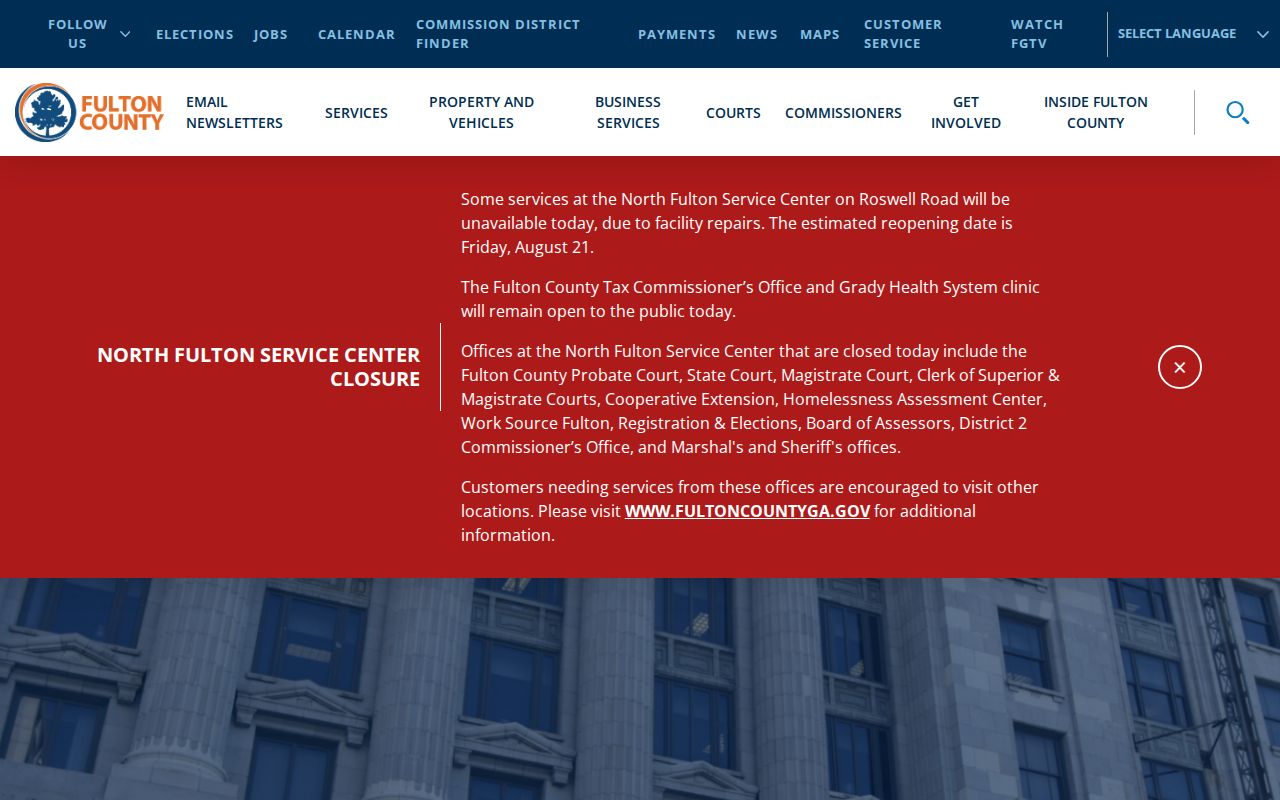
One empty system does not prove the case is absent from every other Fulton court.
Fulton County Magistrate’s Boundary
Civil claims up to $15,000 land in Fulton County Magistrate Court. So do garnishments, dispossessory filings, warrant applications, and preliminary hearings. That dollar figure is worth remembering. A small-claim docket can sit in Magistrate even when a wider Fulton County case lookup starts somewhere else. The court's calendar reflects that split. Landlord-tenant, small-claims, and garnishment matters each get their own listing.
The Magistrate Court homepage collects the court's case lookup and calendar tools in one place.
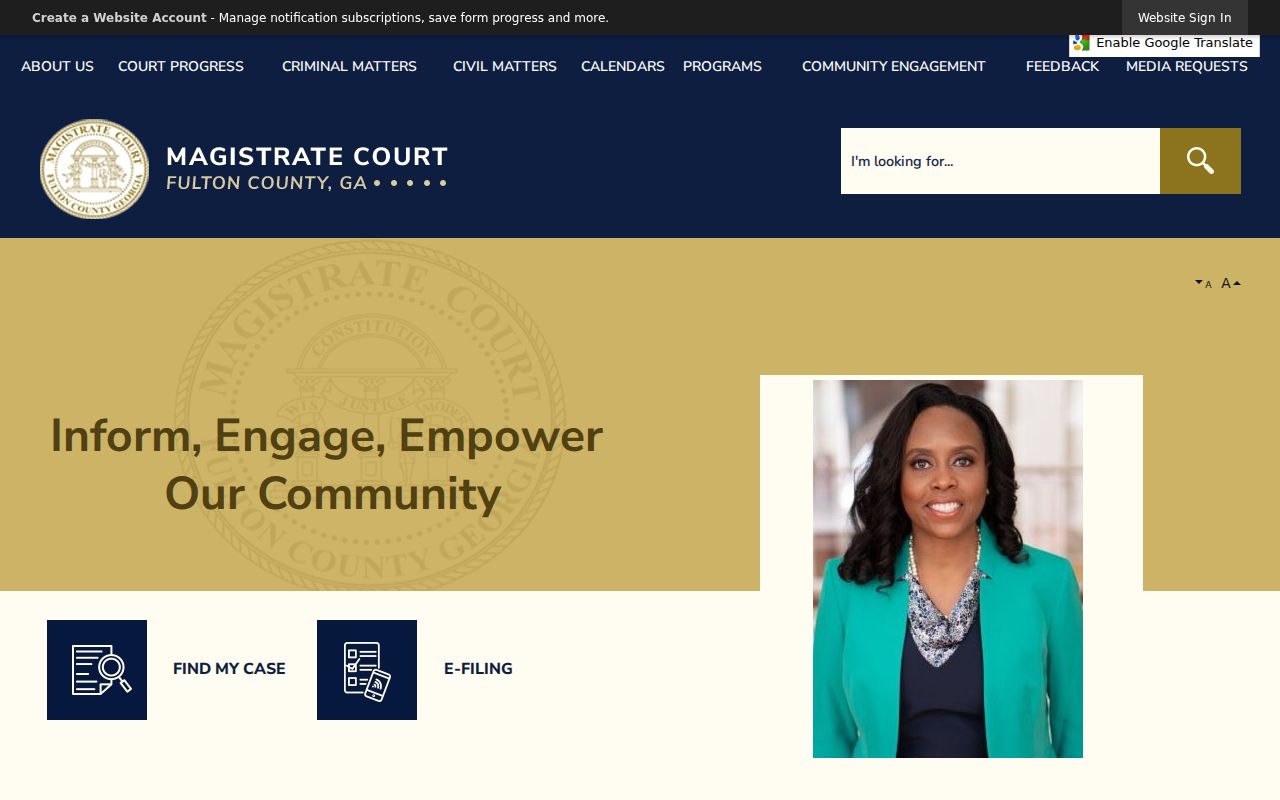
Its separate calendar helps pinpoint the room and setting once you have found the case.
Finding Fulton County Court Dates and Settings
Fulton County court dates surface in several places: the case docket, a court or Magistrate calendar, a public terminal, and the court or coordinator. Check the citation, summons, notice, or filed order first. Then open the newest hearing entry. Magistrate calendars list category, date, time, room, and setting labels, while some municipal calendars add ticket and violation fields. Remember, a public schedule can update on a different cycle from the case register.
Resets demand care. An unapproved request is not permission to miss court. For a Superior matter, take hearing questions to the assigned judge's office or court administration. City matters belong with the city clerk. Special operations notices can close building access even as proceedings continue.
Note: A current filed order and direct court confirmation outweigh an old calendar entry or an unapproved reset request.
Three Fulton Justice Buildings
A downtown docket trail may cross three buildings. They are the Lewis R. Slaton Courthouse at 136 Pryor Street SW, the Justice Center Tower at 185 Central Avenue SW, and the Justice Center Building at 160 Pryor Street SW. The Records Search Center lists public counters at the downtown complex and annex sites. Which building you need depends on three things. The court, the division, and the service each matter. Superior Court's directions page identifies the justice buildings, transit, parking, and security details.
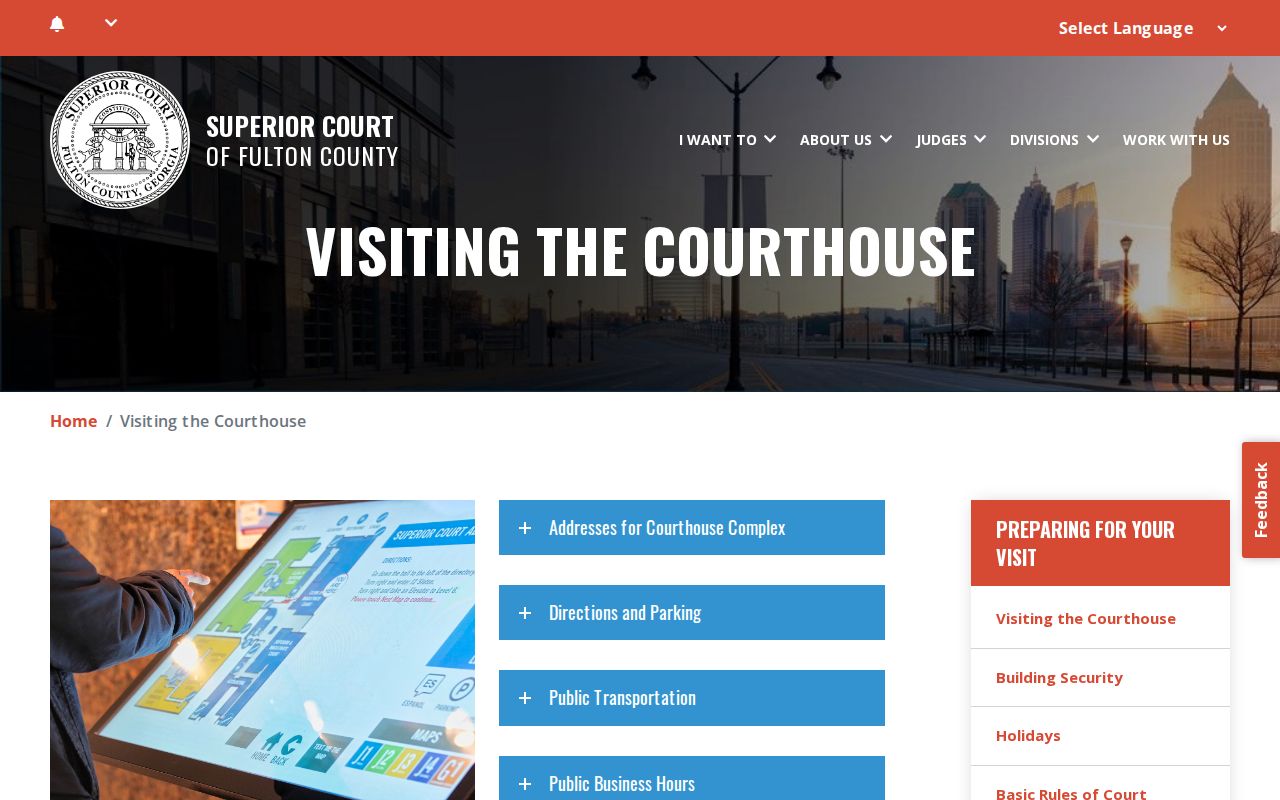
Check the live docket and current notices before you travel, since the hearing site and records counter may differ.
Public Access to Fulton County Court Dockets
Georgia Superior Court records are generally open to inspection. But law, court rule, or an order can limit access. The Georgia Open Records Act governs many government records requests. Court files also answer to judicial rules and clerk procedures. Free viewing at a public access terminal may show the public file. That online display still is not a certified record.
Key rules:
Uniform Superior Court Rule 21 generally keeps Superior Court records open unless access is lawfully limited.
Rule 21.6 requires protected identifiers to be redacted or handled through its protected process.
O.C.G.A. §§ 50-18-71 and 50-18-72 address access, lawful charges, exemptions, and redaction.
A records keeper need not build a report that does not exist. If material is withheld, ask which authority or order controls.
Restricted Fulton County Docket Entries
A blank result does not mean nothing exists. Fulton County juvenile matters run through a confidential court process of their own. A sealed case may return no match, a bare header, or a single restricted event. Family files can show a public shell. Adoption, minor, medical, financial, or protected-address material stays hidden. A recent municipal citation may sit outside the county system. It stays there until it is formally transferred or filed.
Sensitive identifiers such as Social Security numbers and account data are shielded too. Georgia's record-restriction process limits public criminal-history access. It does not always wipe every local court entry, though. So verify the court first. Allow for a known filing delay, then ask the responsible clerk. Never rebuild a restricted record from stray fragments.
The Fulton County Clerk and Docket Records
The Fulton County Clerk of Superior and Magistrate Courts sits at the center of docket records. It covers those two courts. Staff arrange public records for research. They run search counters and provide plain or certified copies on request. State Court records live with the separate State Court operation instead. Whatever the office, a good request names the court and the case number. Add a party, plus the document or date range you want.
Clerk of Superior and Magistrate Courts
136 Pryor Street SW
Atlanta, GA 30303
404-613-5313
The Superior Court site publishes court administration and live access information.
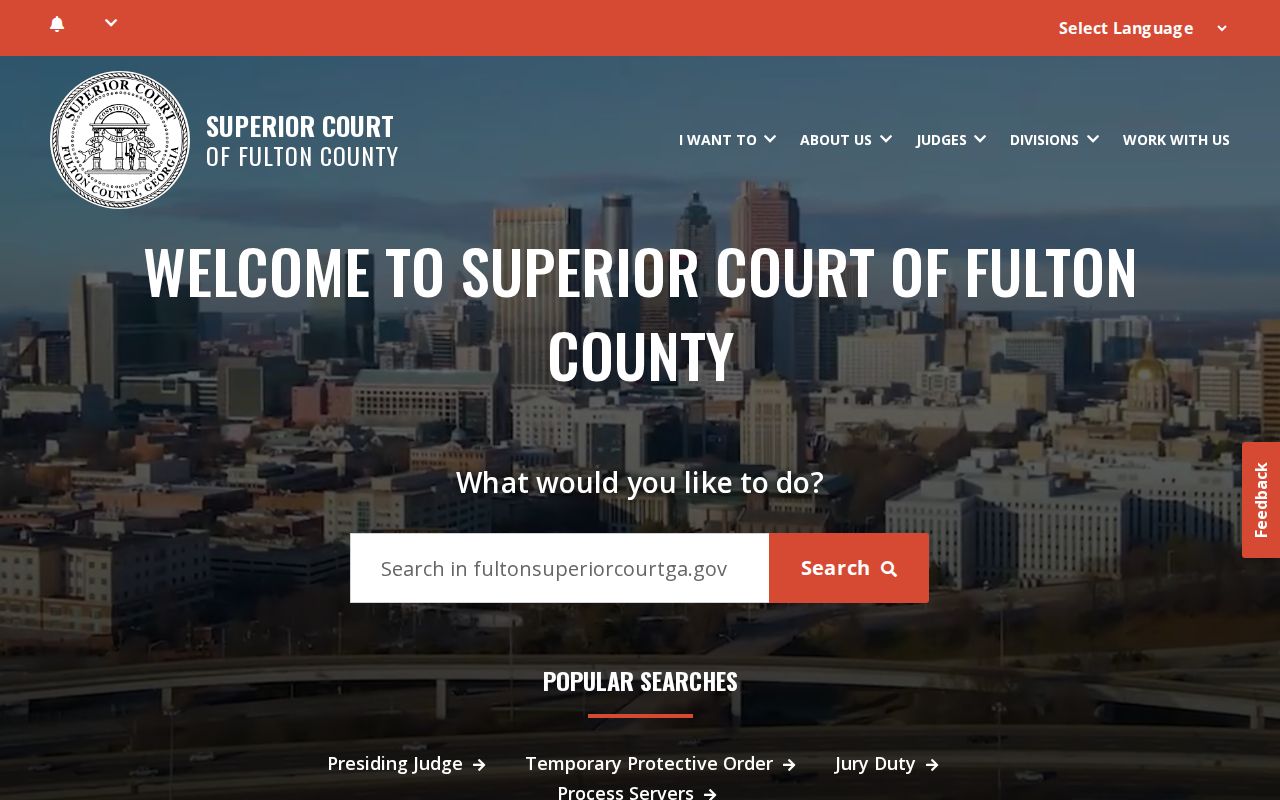
The court site complements the Clerk route with division and operations details.
Public Docket or Certified Copy
An online Fulton County docket works well as a quick reference. When an agency, another court, or a formal process demands proof, get a certified copy instead. The clerk authenticates it. Copy and certification charges follow the Clerk's published fee schedule. Georgia eCertification also handles online requests and authentication.
| Record form | Best use | Source |
|---|---|---|
| Portal docket | Finding case events, status, and settings | Official search |
| Terminal view | Inspecting public file material | Clerk PAT |
| Plain copy | Keeping a readable file copy | Responsible clerk |
| Certified copy | Formal proof with authentication | Clerk or eCertification |
Ask first. Confirm what form the recipient requires before you pay, because a browser printout is not automatically certified.
Federal Dockets in Fulton County
Federal cases from the Atlanta area never show up as Fulton Superior or State Court matters. The Northern District of Georgia runs on federal CM/ECF, while public searches and documents go through PACER. Federal appeals head to the Eleventh Circuit. Bankruptcy records belong to the Northern District Bankruptcy Court. PACER explains federal public case access and charges.
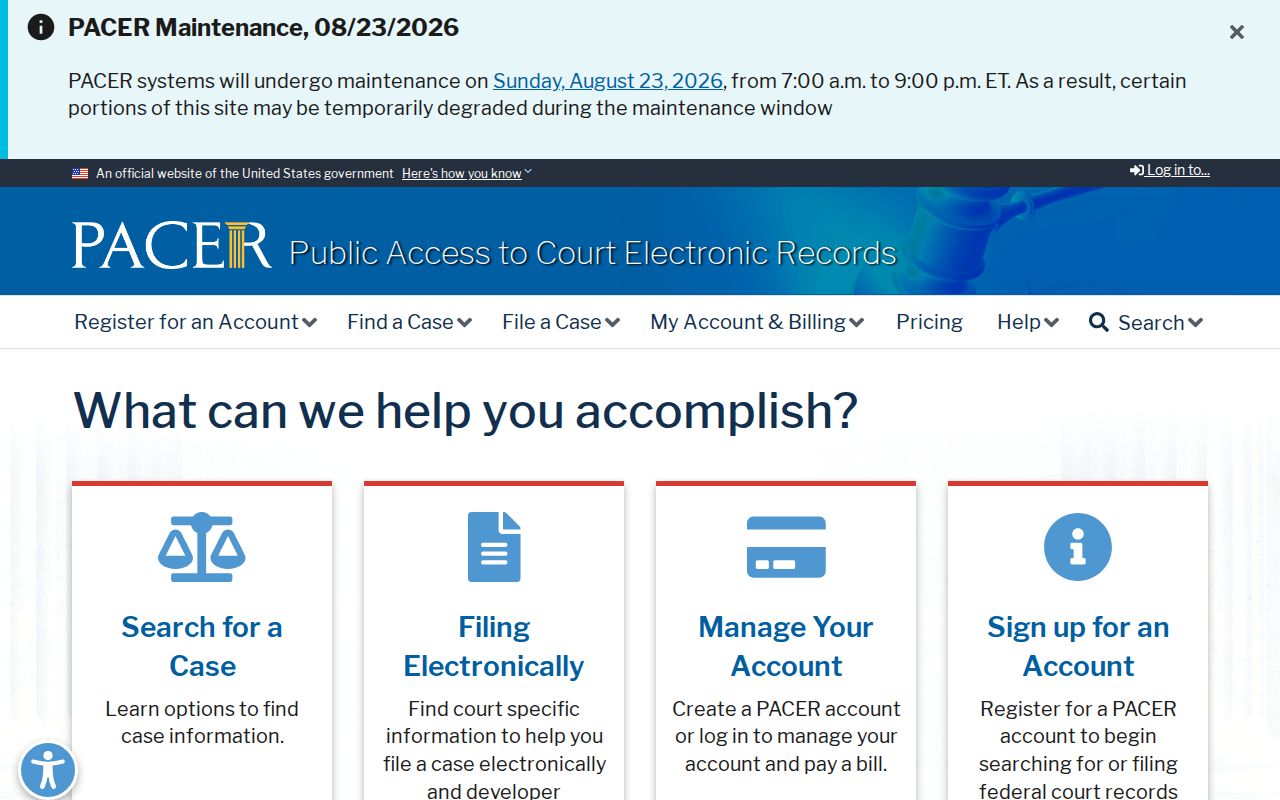
Keep PACER separate from Fulton Odyssey, even for events that happened in the same county. CourtListener's RECAP collection offers another route to some federal material.
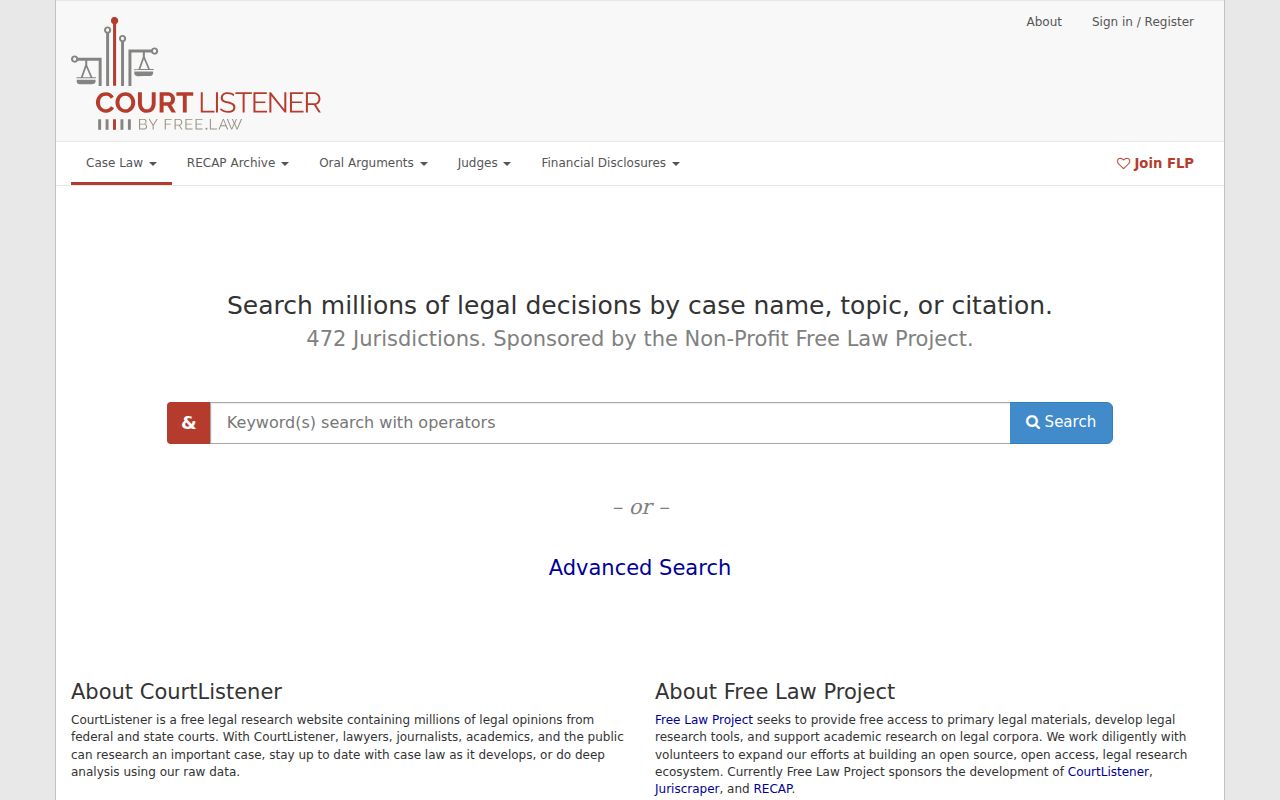
RECAP coverage is incomplete, so PACER and the originating federal court remain the official fallback for any docket question.
Fulton County Docket Access Changes
Access systems shift, and so do court workloads. On February 5, 2025, Fulton reported that Project ORCA, a three-year backlog effort funded with federal recovery money, had wrapped up. Those figures describe one dated project, not a live count of pending cases. The county's public pending-case dataset is pulled daily from Odyssey, and it serves a different purpose than a search for one case.
Superior Court also reported that the Justice Resource Center and its partners assisted nearly 16,000 people with civil self-help needs in 2025. A May 28, 2026 notice kept the downtown complex open during World Cup activity but cautioned that access and service methods could change. That is why a docket, a current court notice, and direct confirmation belong together. Treat dashboard counts and dated announcements as context only.
Note: Context never substitutes for the current entry in a specific case.
Court Dockets by City in Fulton County
Municipal dockets stay local. A matter leaves the city system only when it is transferred, bound over, appealed, or freshly filed with a county court. Atlanta, Sandy Springs, South Fulton, Roswell, and Johns Creek each run a distinct citation, calendar, and clerk workflow. A city police citation belongs with that city first. The figures below are 2020 Census counts used to pick Fulton's five largest incorporated cities.
Atlanta Court Docket
498,715 · Traffic and ordinance cases use Benchmark, the citation, and the clerk.
Sandy Springs Court Docket
108,080 · City citations use GovernmentWindow and municipal clerk support.
South Fulton Court Docket
107,436 · CourtWare supplies a detailed calendar and must-appear marker.
Roswell Court Docket
92,833 · Roswell offers several citation search methods.
Johns Creek Court Docket
82,453 · JusticeONE and the city court handle eligible citations.
The city court keeps its own current municipal record. If a transfer happens, confirm the receiving Fulton County court rather than assuming one continuous docket.
Map and Directions to the Lewis R. Slaton Courthouse
Superior and Magistrate Court records are kept at the Lewis R. Slaton Courthouse, 136 Pryor Street SW, in downtown Atlanta, where the Clerk's Records Search Center sits in Suite C155/J2-101. The building is part of the larger Justice Center complex alongside the Fulton County Justice Center Tower (J1) and the Charles L. Carnes Justice Center (J3); State Court records are separate, at 185 Central Avenue SW. During construction, the Peachtree entrance has been closed since October 13, 2025, so visitors are directed to the Forsyth entrance toward MLK/Shirley Franklin.
Clerk of Superior and Magistrate Courts
Lewis R. Slaton Courthouse, Suite C155/J2-101
136 Pryor Street SW
Atlanta, GA 30303
404-613-5313
Monday-Friday, 8:30 a.m. to 5:00 p.m.
Security screening uses magnetometers, handheld detectors, and package scanners, so do not bring recording devices, food, or large bags without checking first. Paid parking decks and lots serve the complex, juror shuttles run, and MARTA's Five Points station is the nearest rail stop. Confirm any temporary closure alert, including the courthouse's own event-driven notices, before a records trip.